Table of contents
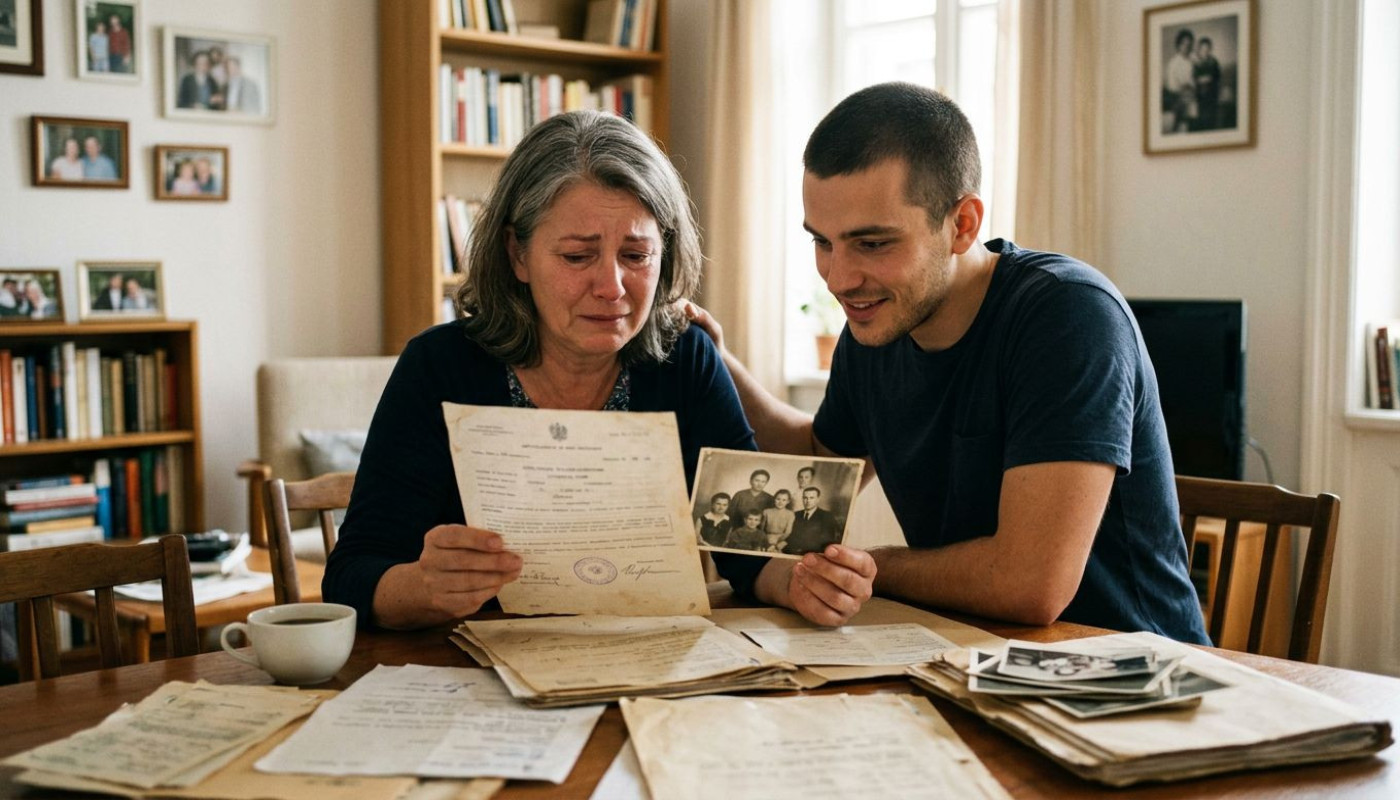
A birth certificate, a visa letter, a court transcript, a land deed; on paper, they look like cold administrative artifacts, yet in newsrooms and archives they often read like intimate diaries written in ink stamps and legal phrasing. As governments digitize records and tighten identity checks, and as individuals increasingly rely on paperwork to travel, work, inherit, or simply exist in the eyes of the state, official documents are taking on a more personal weight. Behind the form fields and signatures, real lives surface, sometimes in ways no one expected.
When a form decides a life
One checkbox can redirect an entire future, and that is not a metaphor. In immigration systems, for example, an error on a date, a mismatch in transliteration, or a missing supporting page can trigger delays that cascade into job losses, expiring leases, and family separation; the bureaucracy does not always recognize how quickly the consequences turn human. In the United States, the National Archives has documented how clerical practices changed the spelling of names at ports of entry over decades, and scholars of migration have long shown that “paper identities” often crystallized under pressure, becoming the version that children and grandchildren inherit. The story behind a passport can be a story of reinvention, but it can also be a story of being misread, and of having to prove, again and again, what one already knows about oneself.
The stakes are measurable. According to the European Commission’s 2024 report on the implementation of the EU’s General Data Protection Regulation, public administrations remain among the sectors receiving the largest number of complaints in several member states, a sign that citizens increasingly contest how their records are handled, corrected, or shared. Meanwhile, the International Organization for Migration has repeatedly highlighted how documentation gaps amplify vulnerability, particularly for displaced people who may lose papers during flight, and then face higher barriers to shelter, healthcare, and legal work. A document, in those contexts, is not merely proof; it is access, and access is time-sensitive.
Even outside migration, paperwork can decide outcomes in ways that feel brutally personal. Consider inheritance disputes, where a single line in a will, a missing witness signature, or an outdated beneficiary designation can overturn long-held expectations within a family, and can harden grief into litigation. Or consider medical systems, where insurance forms and consent documents sit between a patient and a treatment plan; in many countries, the move toward electronic health records has improved continuity of care, yet it has also expanded the number of people and systems touching sensitive data, and with that comes the fear of mistakes that cannot be easily undone.
The typo that rewrote a family
It starts innocently: a letter swapped, a digit dropped, a surname truncated to fit an old form, and then the error becomes the family’s official truth. Genealogists see this constantly in census records, marriage registers, and naturalization papers, where inconsistencies are less a sign of deception than of human processes under strain. In the United Kingdom, the General Register Office has long provided mechanisms for correcting civil registration errors, but anyone who has tried knows that the experience can be emotionally charged, because you are not just fixing an administrative glitch, you are trying to align the state’s narrative with your own. When the paper is wrong, people often feel that their life story has been misfiled.
Data makes the scale of this more tangible. In the US, the Social Security Administration’s Office of the Inspector General has published audits over the years noting how data inaccuracies in identity-related records can lead to improper payments or difficulties in verification processes, and while those reports focus on administrative integrity, the downstream impact lands on individuals: delayed benefits, extra verification hurdles, and a gnawing sense that an invisible system has placed you in the wrong category. Errors compound when databases talk to each other, and they do so more than ever; governments increasingly rely on automated cross-checks between registries, border systems, tax files, and social services.
For families, the consequences can be startlingly intimate. A misspelled surname in one generation can make it harder for the next to claim citizenship by descent, to assert property rights, or to prove lineage in a court case; suddenly, what looked like a harmless inconsistency becomes a barrier. Some people only discover the problem when a life event forces a full audit of their identity trail: a marriage abroad, a new job requiring security clearance, or the death of a parent. By then, the paper chain is long, the witnesses may be gone, and the fight for correction feels like fighting time itself.
And there is a deeper emotional layer. Names, dates, places of birth, and parental details are not sterile facts; they are anchors for belonging. When the official record contradicts family memory, it can ignite old tensions, especially in communities marked by displacement or political upheaval, where documentation may have been issued under pressure, rewritten by different regimes, or lost and reconstructed. The paper may be thin, but the story it carries is heavy.
Inside the drawer of lost documents
Open any “important papers” folder at home and you find a private museum: certificates, contracts, school records, bank letters, maybe a court notice folded too many times. Why do people keep them, even when everything is supposedly digital? Because lived experience has taught them that systems forget, and that the burden of proof is often pushed downward. In the age of data breaches and ransomware, that instinct has only sharpened; when services go offline or accounts are compromised, paper copies and downloaded PDFs become a lifeline. Identity is not just something you are, it is something you can demonstrate under stress.
This is not paranoia, it is a rational response to a documented trend. IBM’s annual Cost of a Data Breach report, widely cited across industries, has consistently shown that breaches are expensive and disruptive, and while its figures are global averages rather than personal stories, the personal aftermath is familiar: new cards, new passwords, new phone calls, and sometimes the chilling realization that your details are circulating beyond your control. Official documents are especially sensitive because they are often the root credentials used to unlock other services, and because institutions tend to treat them as “source of truth.” Once compromised, they are difficult to replace without leaving traces across multiple databases.
Then there is the quieter drama of life events. Divorce paperwork can sit next to birth certificates; adoption records can be both treasured and painful; a deed can represent stability or debt. In many jurisdictions, property documents remain a key driver of disputes, and the World Bank has repeatedly emphasized in its land governance work how secure documentation supports economic development, while weak documentation can fuel conflict. For an individual, that big policy theme translates into whether a family home is safe from contestation, whether a loan is possible, or whether an eviction notice can be challenged. Paperwork, here, is the border between private life and public power.
People also keep documents because they tell stories that are otherwise hard to articulate. A naturalization certificate can embody a journey, a sacrifice, a relief; a military discharge paper can carry pride and trauma in the same ink. Even the most mundane document can be a marker of a turning point: the day a name changed, the day an address became permanent, the day a business officially began. These papers are not just proof for institutions, they are proof for the self.
Digital records, real-world vulnerability
Digitization was supposed to make everything smoother, and in many cases it has. Online portals reduce queues, electronic signatures speed up transactions, and interoperable systems can prevent duplication; yet the shift has also created new fault lines. When records become data, errors can propagate faster, and when identity checks are automated, edge cases get squeezed. The European Union’s push toward a European Digital Identity framework illustrates the promise and the sensitivity of this terrain; policymakers frame it as a way to simplify cross-border services, but civil society groups and privacy regulators keep pressing on questions of data minimization, security, and the right to correct what is wrong.
In practice, individuals often experience digitization through sudden friction. A platform may reject a document photo because of glare, a mismatch in formatting, or a name that includes characters the system cannot handle; what follows is not simply a technical annoyance, it is time lost and opportunities missed. Digital “self-service” can also shift labor onto citizens, who must scan, upload, and categorize their own lives, and who must navigate support channels when something goes wrong. For people with limited digital access, language barriers, or disabilities, that burden can be steep, and it can turn a basic administrative step into an obstacle course.
There is also a growing awareness that people need better guidance to navigate paperwork and document services safely, especially when stakes are high and misinformation is everywhere. That is why many readers look for an informative post before making decisions, whether they are dealing with identity checks, legal filings, or administrative requests, because clarity can prevent costly mistakes. In a landscape where scams mimic official messages, and where legitimate processes can be confusing, reliable explanations are not a luxury; they are a form of protection.
The most striking part is how quickly digital problems become personal. A locked account can stop a rent application, a delayed background check can derail a job start date, and a database error can force someone to justify themselves to a skeptical official. The language of “records management” and “verification” sounds neutral, yet for the person on the receiving end it can feel like being put on trial by an algorithm, without a clear path to appeal. The paperwork has changed shape, but the emotional pressure remains.
Before you file, do this first
Start with a checklist, and budget time for delays; booking an appointment early can be the difference between a smooth process and a missed deadline. Keep scanned copies in a secure location, verify spelling and dates across every document, and if you need certified copies, request them well ahead of travel or legal steps. Look up whether you qualify for fee reductions or public assistance programs, because many administrations offer help that is underused.
Similar

Exploring The Resurgence Of Pocket Watches In Modern Fashion

How To Choose The Right Type Of Boat For Your Needs

Strategies To Enhance Engagement During Nonprofit Board Meetings

5 must-haves for expectant mothers

What are the best live cash games at online casinos ?

What are the benefits of the clinical research network ?

Which transgender dating site to choose?

How to choose a drone ?

What are the criteria for choosing a skull and crossbones for decoration?

¿Qué necesitas saber sobre Dragon Ball?

The Château de Fontainebleau : what are the things to see there ?

Tips for choosing wireless headphones

What are the practices that can damage the battery of a laptop?

Let's talk about Adrian Cheng, CEO of New World Development

3 tips to boost your profile on dating sites

What are the different ways to meet a trans woman in Dallas?

How to write a Christmas card message

Reasons to use tablets in business.
